Convenience foods are described as problem free preparation and
consumption of variety products. Food products that save time and
effort in preparation, consumption, or cleanup are omnipresent.
Self-rising flour is a convenience product made by adding salt
and leavening to all-purpose flour. Self rising flour provides a
great convenience for house hold use. Their use saves time and energy
to eliminate the hardships of measuring out and provide desirable
quality to product.
It's best for tender biscuits, muffins, pancakes and some cakes.
Self-rising flour is best stored tightly wrapped in its original box and
used within six months of purchase — longer than that and the baking
powder in it begins to lose its oomph.
Self rising flour contains bicarbonate, together with an acid
ingredient, when made into a dough and baked, CO2 is generated which
causes dough aeration and development.
Self-rising can be substituted for all-purpose flour
by reducing salt and baking powder according to these proportions.
Convenience product: Self-rising flour
LEARN ABOUT FOOD INGREDIENT AND THE FUNCTION OF FOOD INGREDIENT. INGREDIENT IS A SUBSTANCE THAT FORMS PART OF A MIXTURE. IN COOKING OR FOOD PROCESSING, RECIPES SPECIFY WHICH INGREDIENTS ARE USED TO PREPARE A SPECIFIC DISH. MANY COMMERCIAL PRODUCTS CONTAIN A SECRET INGREDIENT PURPOSELY TO MAKE THEM BETTER THAN OTHERS.
Showing posts with label flour. Show all posts
Thursday, October 28, 2021
Monday, April 03, 2017
Flour ingredient for bread baking
Currently, bread is an important part of the diet for millions of people worldwide. Its complex nature provides energy, protein, mineral and many other macro and micronutrients.
Wheat is the major source grain for bakery ingredients.
Wheat is normally categorized into hard and soft wheat as well as bread making and non-bread making. Almost all hard wheats are of bread making quality while soft wheats do have bread making quality while others do not.
Acceptance for bread making requires the wheat to pass tests on protein quantity, protein quality and falling number. Wheat flour is favored because it forms elastic doughs that contribute a light texture to baked goods with yeast or other leavening agent.
Wheat flour contains glutens, a family of proteins (gliaden and glutein) that gives dough its elasticity. Aging partially oxidizes the protein and creates flour that yields even more elastic dough for baking.
During mixing, dough is exposed to large uni and biaxial deformations and a continuous protein networked is formed, which is stabilized by disulfide bonds and solidified thiol/disulfide interchange reactions.
The input of mechanical energy that takes places during kneading confers the necessary energy for distributing flour component, favoring the protein interaction and the formation of covalent bonds between them, which finally leads to the formation of the continuous macromolecular viscoelastic structure.
Flour ingredient for bread baking
Wheat is normally categorized into hard and soft wheat as well as bread making and non-bread making. Almost all hard wheats are of bread making quality while soft wheats do have bread making quality while others do not.
Acceptance for bread making requires the wheat to pass tests on protein quantity, protein quality and falling number. Wheat flour is favored because it forms elastic doughs that contribute a light texture to baked goods with yeast or other leavening agent.
Wheat flour contains glutens, a family of proteins (gliaden and glutein) that gives dough its elasticity. Aging partially oxidizes the protein and creates flour that yields even more elastic dough for baking.
During mixing, dough is exposed to large uni and biaxial deformations and a continuous protein networked is formed, which is stabilized by disulfide bonds and solidified thiol/disulfide interchange reactions.
The input of mechanical energy that takes places during kneading confers the necessary energy for distributing flour component, favoring the protein interaction and the formation of covalent bonds between them, which finally leads to the formation of the continuous macromolecular viscoelastic structure.
Flour ingredient for bread baking
Labels:
baking,
bread,
flour,
wheat flour
Monday, May 23, 2016
Ingredients for premix flour of cakes
The dry ingredients used for some baked goods, especially cakes, are premixed industrially and sold as prepared mixes, and while the user must add the fluid ingredients and bake the products, it is still a convenient system for the consumer.
Concentrated mixes or premixes can be formulated to include any number of functional ingredients based upon a desired level of completeness by a user of such concentrated mix or premix, which is frequently a commercial baker or food service group.
The premix is made by blending all the ingredients together on any suitable mixer such as a ribbon blender. The ingredients in premixes are simple: the flour, egg powder, shortening, fruit or flavoring components, and leavening agents.
They are combined in the dry state, although, when mixed, the shortening is in the melted or liquid state and emulsifiers, such as monoglycerides, which improve air incorporation during mixing, may be used. The premix must contain the correct levels of nutrients to be uniform and free flowing.
The type of flour must be suitable for the particular product, flours of high-ratio type generally being used.
The fat must have the correct plasticity and adequate stability to resist oxidation.
Ingredients for premix flour of cakes
Concentrated mixes or premixes can be formulated to include any number of functional ingredients based upon a desired level of completeness by a user of such concentrated mix or premix, which is frequently a commercial baker or food service group.
The premix is made by blending all the ingredients together on any suitable mixer such as a ribbon blender. The ingredients in premixes are simple: the flour, egg powder, shortening, fruit or flavoring components, and leavening agents.
They are combined in the dry state, although, when mixed, the shortening is in the melted or liquid state and emulsifiers, such as monoglycerides, which improve air incorporation during mixing, may be used. The premix must contain the correct levels of nutrients to be uniform and free flowing.
The type of flour must be suitable for the particular product, flours of high-ratio type generally being used.
The fat must have the correct plasticity and adequate stability to resist oxidation.
Ingredients for premix flour of cakes
Labels:
cakes,
flour,
ingredients,
premix
Tuesday, August 07, 2012
Cake flour
The type of flour used for baking cake defines its flavor and texture. The chemical composition of this flour is ideal for cake making.
Cake flour contains less protein about 8% and more starch than all purpose flour and holds less water. It is low in gluten forming potential, is highly bleached and finely milled. It is made with soft wheat.
The low content of gluten help hold the evenly distributed air bubbles in the batter, makes light textured, tender cakes and biscuits.
Without cake flour, the cakes would not rise, or more likely they would rise and then collapse during baking and cooling.
By using cake flour, during late stages of baking, starch granules gelatinizes to set structure. The starch granules absorb water and swell then thicken batters, even as large amount of water and sugar added.
Rice flour is the most common substitute for wheat flour in cake recipes. If it is used alone in a recipe, however, rice flour will make for a gritty cake texture.
Grittiness can be eliminated by combining the rice flour with other flours.
Cake flour contains less protein about 8% and more starch than all purpose flour and holds less water. It is low in gluten forming potential, is highly bleached and finely milled. It is made with soft wheat.
The low content of gluten help hold the evenly distributed air bubbles in the batter, makes light textured, tender cakes and biscuits.
Without cake flour, the cakes would not rise, or more likely they would rise and then collapse during baking and cooling.
By using cake flour, during late stages of baking, starch granules gelatinizes to set structure. The starch granules absorb water and swell then thicken batters, even as large amount of water and sugar added.
Rice flour is the most common substitute for wheat flour in cake recipes. If it is used alone in a recipe, however, rice flour will make for a gritty cake texture.
Grittiness can be eliminated by combining the rice flour with other flours.
Cake flour
Thursday, September 21, 2006
Variety of flour
Food Ingredient
An ingredient used in many foods, flour is a fine powder made from cereals or other starchy food sources. It is most commonly made from wheat, but also maize (aka corn), rye, barley and rice, amongst many other grasses and non-grain plants (including many Australian species of acacia).
The vast majority of today's flour consumption is wheat flour. Wheat varieties are typically known as "hard" or "strong" if they have high gluten content, and "soft" or "weak" if gluten content is low.
Hard flour, or "bread" flour, is high in gluten and so forms a certain toughness which holds its shape well once baked.
Soft flour is comparatively low in gluten and so results in a finer texture. Soft flour is usually divided into "cake" flour, which is the lowest in gluten, and "pastry" flour, which has slightly more gluten than cake flour.
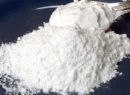
Corn flour is very popular in the southern United States and in Mexico. Coarse whole-grain corn flour is usually called corn meal. Corn meal which has been leached with lye is called masa harina and is used to make tortillas and tamales in Mexican cooking.
Corn flour should never be confused with cornstarch, which is known as cornflour in British English.
100% Rye flour is used to bake the traditional sourdough breads of Germany and Scandinavia. Most rye breads use a mix of rye and wheat flours because rye has a low gluten content. Pumpernickel bread is usually made exclusively of rye, and contains a mixture of rye flour and rye meal.
Rice flour is of great importance in Southeast Asian cuisine. Also edible rice paper can be made from it. Most rice flour is made from white rice, thus is essentially a pure starch, but whole-grain brown rice flour is commercially available.
Chestnut flour is popular in Corsica, the Périgord and Lunigiana. In Corsica, it is used to cook the local variety of polenta. In Italy, it is mainly used for desserts.
Chickpea flour (besan) is of great importance in Indian cuisine, and in Italy, where it is used for the Ligurian farinata.
Flour can also be made from soy beans, arrowroot, potatoes, taro, cattail and other non-grain foodstuffs.
Tang flour is a kind of wheat flour used in Chinese cooking that is suitable for making outer layer of dumplings and buns. It is also called wheat starch. You can find it in any Chinese supermarket.
Bread, pasta, crackers, many cakes, amongst many other foods, are made using flour. Wheat flour is also used to make a roux as a base for gravy and sauces.
White wheat flour is the traditional base for wallpaper paste. It is also the base for papier-mâché. Cornstarch is a principal ingredient of many puddings.
Variety of flour
An ingredient used in many foods, flour is a fine powder made from cereals or other starchy food sources. It is most commonly made from wheat, but also maize (aka corn), rye, barley and rice, amongst many other grasses and non-grain plants (including many Australian species of acacia).
The vast majority of today's flour consumption is wheat flour. Wheat varieties are typically known as "hard" or "strong" if they have high gluten content, and "soft" or "weak" if gluten content is low.
Hard flour, or "bread" flour, is high in gluten and so forms a certain toughness which holds its shape well once baked.
Soft flour is comparatively low in gluten and so results in a finer texture. Soft flour is usually divided into "cake" flour, which is the lowest in gluten, and "pastry" flour, which has slightly more gluten than cake flour.

Corn flour is very popular in the southern United States and in Mexico. Coarse whole-grain corn flour is usually called corn meal. Corn meal which has been leached with lye is called masa harina and is used to make tortillas and tamales in Mexican cooking.
Corn flour should never be confused with cornstarch, which is known as cornflour in British English.
100% Rye flour is used to bake the traditional sourdough breads of Germany and Scandinavia. Most rye breads use a mix of rye and wheat flours because rye has a low gluten content. Pumpernickel bread is usually made exclusively of rye, and contains a mixture of rye flour and rye meal.
Rice flour is of great importance in Southeast Asian cuisine. Also edible rice paper can be made from it. Most rice flour is made from white rice, thus is essentially a pure starch, but whole-grain brown rice flour is commercially available.
Chestnut flour is popular in Corsica, the Périgord and Lunigiana. In Corsica, it is used to cook the local variety of polenta. In Italy, it is mainly used for desserts.
Chickpea flour (besan) is of great importance in Indian cuisine, and in Italy, where it is used for the Ligurian farinata.
Flour can also be made from soy beans, arrowroot, potatoes, taro, cattail and other non-grain foodstuffs.
Tang flour is a kind of wheat flour used in Chinese cooking that is suitable for making outer layer of dumplings and buns. It is also called wheat starch. You can find it in any Chinese supermarket.
Bread, pasta, crackers, many cakes, amongst many other foods, are made using flour. Wheat flour is also used to make a roux as a base for gravy and sauces.
White wheat flour is the traditional base for wallpaper paste. It is also the base for papier-mâché. Cornstarch is a principal ingredient of many puddings.
Variety of flour
Labels:
flour,
ingredient,
usage,
variety
Subscribe to:
Posts (Atom)
Popular Posts
-
Acetylated Monoglyceride An emulsifier manufactured by the interesterification of edible fats with triacetin in the presence of catalysts ...
-
What is Food Additive? The broadest definition of a food additive is any substance that becomes part of a food product, either directly or ...
-
Substance that make a batter rise are called leavening agents. Leavening agents play a crucial role in the development of muffins. In making...
-
Carrageenan in Gummy Candies Gummy candies are included in a large category of confectionary products such as jellies, pastilles, and win...
-
Fenugreek flavor Fenugreek is a small European annual herb of the natural order Leguminoseae and now widely cultivated in southern Europe, N...

