Showing posts with label applications. Show all posts

Friday, January 21, 2022

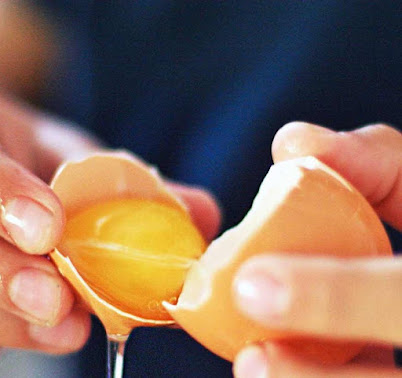
Hen egg yolk

Fresh egg yolk is an excellent source of proteins, lipids, and phospholipids. In general, egg yolk contains approximately 50% water. The dry weight of egg yolk is made up of 2/3 of lipids, and 1/3 of proteins.

Eggs are an excellent source of easy to digest, high quality protein that can play an important role in the diet of most Americans. Egg proteins are distributed equally between egg white and egg yolk, while lipids, vitamins, and minerals are essentially concentrated in egg yolk. Egg yolk proteins are distributed in two particular parts: the granules and the plasma in which the former are suspended.

Hen egg yolk is undoubtedly an efficient ingredient in many food products as it combines, not only functional, but also, nutritional and organoleptic properties. Yolks supply flavor and mouthfeel that consumers find acceptable; they have many culinary uses.

Eggs do not contain a lot of saturated fat. Instead, the fat in eggs is primarily unsaturated and is similar to vegetable fats. Eggs contain only 11.2% total fat, mainly in the yolk. Egg yolks contain all three lipids (triglycerides) fats and oils, phospholipids, and sterols in large spheres, granules, and micelles.

One chicken egg yolk contains the actual amount of IgY equivalent to that as 30ml of blood/serum. Due to this high quantity of consistent chicken egg yolk antibodies (IgY) and their high epitope specificity and affinity has led to the broad use of IgY antibodies in scientific and medicine therapeutic fields. Chicken egg yolk antibodies (IgY) have wider applications in diseases prevention, control and treatments where they are systematically used to treat victims of Snake venom, CPV, Rabies.
Hen egg yolk
Friday, November 19, 2021

Pumpkin fruit

Pumpkin (Cucurbita moschata Duch ex Poir) belong to the family Cucubitaceae. It is one of the important among the vegetable crops and native of Mexico and extensively cultivated in India, Africa, Latin America, Southern Asia and the United States.

Pumpkin fruits are sweet when ripe with yellow or orange flesh rich in β-carotene, a precursor of vitamin A. Pumpkin is a rich source of functional food components like vitamins, minerals and dietary fibers.

Carotenoids derived from pumpkin fruit can be used as natural food colorant. Pumpkin fruit is a crop with good preservation capacity but regarding good quality of product pumpkins generally cannot be stored beyond 90 days, even in ideal storage conditions.

Pumpkin fruits are picked when nearly or fully mature 4–6 weeks after flowering. The skin is variable in thickness, but soft, smooth and durable. The skin color can be from light to dark green, light to dark orange, and the pulp can vary considerably from brown, to completely white, bright orange to greenish light.

The pulp can be sweet, smooth and usually nonfibrous, and the seeds can be numerous, ovate-elliptic, with a yellowish white surface.

The fruit can be steamed, boiled or baked. Pumpkin also can be processed as a powder which can be used in drinks and soups. Pumpkin has vast scope of diversification for its application in the production of commercial products such as jam, jelly, marmalades, puree, sauces, chutney, pickle and halwa, cookies and weaning mix, pies and beverages.

Pumpkin flour could be used to supplement cereal flours in bakery products, soups, instant noodles and natural coloring agent in pasta and flour mixes. Pumpkin seeds, generally thrown away are otherwise, a rich source of oil and nutrients and could be consumed as food. The seed flour is used as a protein supplement in bread and cookies.
Pumpkin fruit

Friday, January 22, 2021

Curry leaves

Curry plant belongs to Rutaceae family which is a popular leaf-spice in food due to its distinct aroma by the presence of volatile compounds and ability to improve digestion.

The species name commemorates the botanist Johann König. The Murray commemorates Swedish physician and botanist Johann Andreas Murray who died in 1791. Hence the botanical name of the curry leaves is Murraya koenigii.

Curry leaves are a popular leaf-spice used in very small quantities for their distinct aroma due to the presence of volatile oil and their ability to improve digestion.

The curry leaves are a rich source of many carbazole alkaloids with a diverse chemical composition. Solvents like ethyl acetate, ethanol, petroleum ether, water and chloroform have been used by researchers to prepare the plant extracts, and compounds such as alkaloids, flavonoids carbohydrates, and sterol have been reported to be present in them.

Curry leaves are aromatic in nature. The leaves are shiny and smooth with paler undersides. Leaves are pinnate, exstipulate, having reticulate venation and having ovate lanceolate with an oblique base, with 11-21 leaflets, in which each leaflet is 0.79 - 1.57 inch long and 0.39 - 0.79 inch broad.

Curry leaf is an important leafy vegetable. The leaves have a slightly pungent, bitter and acidic taste, and they retain their flavor and other qualities even after drying. They are hence used in various types of curries.

It mainly used in cooking to provide flavoring in cuisine including fish or meat curries, vegetables, fried rice, soup, pickles, egg omelet, scrambled egg, and curry powder as well. Besides, it used as the cuisine; curry leaves have used for centuries for biological activities in human health.

In the eastern Asian community, curry leaves traditionally used in diet to improve appetite and digestion.
Curry leaves


Tuesday, December 15, 2020

Beetroot

The beet, Beta vulgaris is a plant in the Chenopodiaceae family having bright crimson colour. It is best known in its numerous cultivated varieties, the most well-known of which is the purple root vegetable known as beetroot or table garden beet.

It is famous for its juice value and medicinal properties; and known by several common names like beet, chard, spinach beet, sea beet, garden beet, and white beet.

Today, beetroot is grown in many countries worldwide, is regularly consumed as part of the normal diet, and commonly used in manufacturing as a food colouring agent known as E162.

The usually deep-red roots of beetroot are eaten boiled either as a cooked vegetable, or cold as a salad after cooking and adding oil and vinegar, or raw and shredded, either alone or combined with any salad vegetable.

It also can made into soup, which is popular in many Eastern and Central European countries.

There are huge numbers of red beetroot-based dietary supplements and functional food on the market: juice and juice mixtures (predominantly, with lemon juice), gels, fermented and fractionated juice, dried powder (tablets, capsules, micro-capsulated formulations, crunchy beetroot slices) and beetroot enriched bread.

Beetroots main benefits are that it contains no fat, very few calories and is a great source of fibre. The best quality and root colour are obtained when the air temperature ranges between 10 and 18 ºC. In contrast to fruits, the main sugar in beetroot is sucrose.

Modern pharmacology shows that red beet extracts exhibit antihypertensive and hypoglycaemic activity as well as excellent antioxidant activity.
Beetroot


Popular Posts

FoodNavigator RSS

Food Packaging Technology

BannerFans.com BannerFans.com